



.jpg)
Construction has never been more compliant, and yet it remains one of the most dangerous major industries in the world. That’s not a paradox. It’s proof we’re solving the wrong problem.
In the US alone, work-related injuries and illnesses cost more than $97 billion each year through medical expenses, lost productivity, project delays and insurance claims. Despite tighter regulations and more documentation, risk on site persists.
This gap exists not because safety systems don’t work, but because paperwork aimed at simply “passing inspections” doesn’t prevent risk.
What jobsites actually need isn’t more compliance pressure. They need people at every level to trust the system enough to use it and act early.
When confidence exists on site, compliance stops being the goal and becomes the outcome.
The problem with paper processes
Despite all the innovation in construction, 65% of contractors still manage jobsites manually with siloed computer files and paper-based workflows.
Now, these systems exist for good reasons. They are familiar, defensible, and often required. But they also assume ideal behaviour from busy crews working in changing conditions.
On a live jobsite where priorities shift by the hour, safety processes that feel disconnected from the flow of work are often worked around or completed after the fact.
One safety officer described it bluntly:
“We had supers who pushed production really hard and couldn’t care less about safety. If they had to run orientations on the safety team’s behalf, they would never file it with the right name in the system. It was just a suffer fest.”
That lack of visibility doesn’t just impact safety, it slows productivity.
As one Vice President of Operations of General Contractor explained:
“During our growth, our sites became larger and more complex…we saw an increase in daily orientations and client reporting, and our project teams lost valuable time executing the project just trying to track and manage paperwork.”
Yes, compliance documentation is essential. But documentation that no one trusts or uses consistently is pretty much useless. It’s a liability masquerading as protection.
Where technology improves field productivity and builds confidence
Here’s what confidence looks like in the field: A Crane is performing a pick and crews need to be made aware. The Superintendent has everyone alerted instantly to the change in working conditions, down to every single worker on site, not just their foremen.
That kind of response only works when information moves as fast as the jobsite does.
When Field Ops teams have a real-time view of who is on site, what work is underway, and which requirements are complete, they can make informed decisions on the ground as conditions change. Software built for the realities of the field makes this possible by keeping information accurate and easy to access.
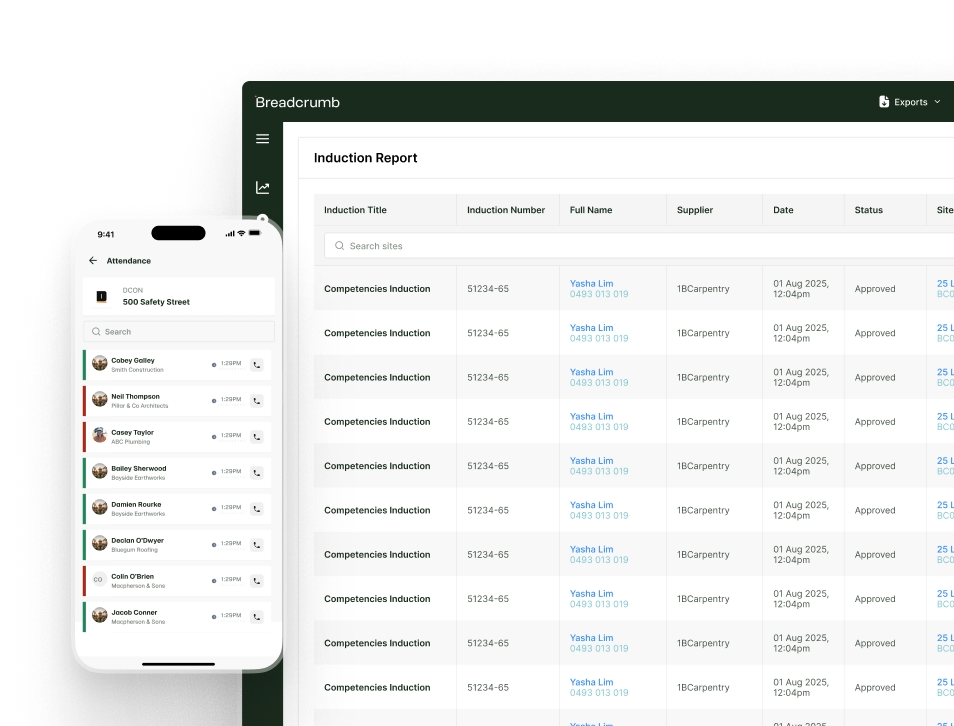
Breadcrumb, a safety and productivity platform used by Top 400 ENR contractors, supports this shift by centralising orientations, pre-task plans, and workforce visibility, with direct communication to every worker on site, all seamlessly integrated with Procore.
"By centralizing documentation and simplifying how information is shared, Breadcrumb has enhanced our productivity and strengthened our safety culture…,” said Tepa’s Staff and Safety Officer, Jordan Stokes.
The intuitive tool makes onboarding lightning fast without removing the human element. Unnecessary admin is eliminated and Spanish-speaking crews can engage with multilingual orientation materials, meaning every worker spends less time waiting and more time building.
“We had a new subcontractor start with a large crew, they were orientated and working within 45 minutes,” said Codaray Construction Safety Manager, Cole Dillon.
When systems provide timely, trustworthy information, confidence grows. And when confidence grows, people act earlier.
Why acting early delivers real returns
Research consistently shows that safety delivers a $4 to $6 return for every dollar invested when efforts focus on identifying risk early and taking action.
But that return doesn’t come from filing more forms. It comes from crews who trust the system enough to catch problems early.
The construction industry is at a turning point. As digital tools become embedded in field operations, safety is shifting from something teams document after the fact to something they manage in real time.
The question is not whether compliance is necessary. It is whether your safety system helps people act before something goes wrong, or simply explains what happened after.
When safety is built around people and data, compliance becomes a byproduct, not the goal.
built for the field.
